From Idea to Impact: Building Products That Solve Real Problems
Introduction
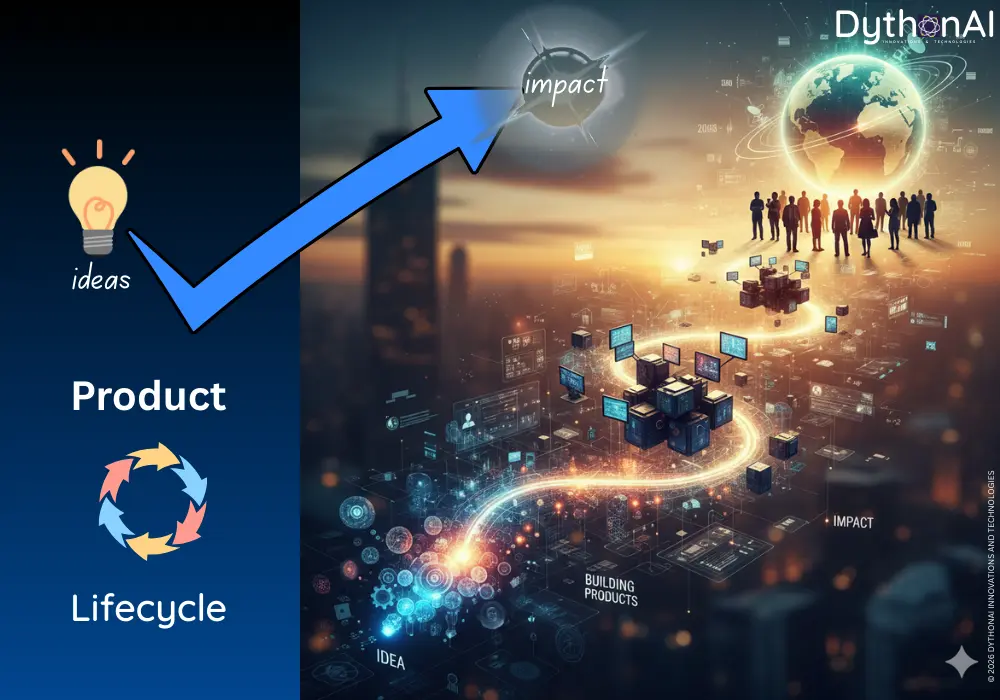
In a world overflowing with apps, platforms, and tools, the products that truly stand out are not the most complex or the most hyped—they’re the ones that solve real problems. Behind every impactful product is a thoughtful journey from idea to execution, guided by innovation and a well-managed product lifecycle.
This article explores how successful products are built, focusing on product lifecycle stages and the role of innovation in transforming ideas into meaningful impact.
1. The Spark: Identifying a Real Problem
Every great product starts with a problem worth solving.
Too often, teams fall in love with an idea before validating whether anyone actually needs it. Impact-driven products flip that approach: they begin with deep problem discovery.
Key questions at this stage:
Who is experiencing this problem?
How are they solving it today?
Why are existing solutions insufficient?
How painful or frequent is the problem?
Techniques like user interviews, surveys, market research, and observational studies help ensure the idea is grounded in reality—not assumptions.
Innovation begins here, not with technology, but with empathy.
2. Ideation & Validation: Shaping the Right Solution
Once a real problem is identified, the focus shifts to exploring solutions.
This is where creativity meets constraint. Brainstorming multiple approaches, mapping user journeys, and defining value propositions allow teams to innovate without overbuilding.
Minimum Viable Product (MVP)
A critical step in modern product development is creating an MVP—a simplified version of the product that delivers core value.
The goal is not perfection, but learning:
Does this solution actually solve the problem?
Will users adopt it?
What features matter most?
Fast feedback loops reduce risk and save resources while sharpening the product vision.
3. Development: Turning Vision into Reality
With validated assumptions, the product enters the development phase of the lifecycle.
Here, cross-functional collaboration is essential. Product managers, designers, developers, and stakeholders must stay aligned on:
User needs
Business goals
Technical feasibility
Innovation during development isn’t about adding more features—it’s about making smart trade-offs, optimizing performance, and designing intuitive experiences.
Best practices include:
Agile or iterative development
Continuous testing and quality assurance
Regular user feedback integration
A well-executed build phase lays the foundation for scalability and long-term success.
4. Launch: Introducing the Product to the World
Launching a product is more than pushing it live.
A successful launch ensures that the right audience understands:
What the product does
Why it exists
How it improves their lives
This stage of the product lifecycle requires tight alignment between product, marketing, and support teams.
Key elements of a strong launch:
Clear messaging and positioning
Onboarding experiences that reduce friction
Monitoring early usage and performance metrics
Innovation here often shows up in go-to-market strategies, not just features.
5. Growth: Learning, Iterating, and Scaling
After launch, the real work begins.
The growth stage focuses on optimizing the product based on real-world usage. Data and feedback become powerful tools for innovation.
Metrics to watch:
User retention and engagement
Conversion rates
Customer satisfaction
Feature adoption
This phase is about continuous improvement—enhancing what works, fixing what doesn’t, and evolving with user needs.
Products that scale successfully remain flexible, adapting to new markets, technologies, and behaviors.
6. Maturity: Sustaining Value Through Innovation
As products mature, growth may slow—but innovation should not.
The challenge at this stage is avoiding stagnation. Mature products must:
Introduce meaningful enhancements
Improve efficiency and performance
Explore adjacent use cases or markets
Innovation here is often incremental rather than disruptive, but it’s no less important. Listening to loyal users and anticipating future needs keeps the product relevant.
7. Decline or Reinvention: Knowing When to Evolve
No product lasts forever.
Eventually, changes in technology, user expectations, or competition may push a product into decline. Smart product teams recognize this as an opportunity—not a failure.
Options include:
Reinventing the product with new capabilities
Pivoting to a different problem space
Sunsetting the product gracefully
Impact-focused organizations treat this stage with as much intention as the beginning, ensuring users are respected throughout the transition.
Innovation as a Continuous Thread
Across every stage of the product lifecycle, innovation plays a different role:
Early stages: Innovation is exploratory and user-driven
Mid stages: Innovation is iterative and data-informed
Later stages: Innovation is strategic and sustainability-focused
The most successful products don’t rely on a single breakthrough idea—they evolve through continuous learning and adaptation.
Final Thoughts: Building for Impact
Building products that solve real problems requires more than technical skill. It demands curiosity, empathy, discipline, and a deep respect for the product lifecycle.
When teams prioritize real user needs, validate early, innovate thoughtfully, and adapt continuously, ideas don’t just become products—they create impact.
From idea to impact, the journey is intentional. And when done right, it changes lives—one solution at a time.
Want to build products that truly matter? Start with the problem, respect the process, and let innovation guide every stage.