How the Internet Is Evolving from Connectivity to Intelligence
Introduction
For decades, the internet has been defined by one core promise: connectivity. It connected people to people, businesses to customers, and information to anyone with a screen and a signal. But today, that definition is no longer enough. The internet is undergoing a profound transformation—one that moves beyond simple connectivity toward intelligence.
Welcome to the era of the Intelligent Internet.
From Static Pages to Intelligent Systems
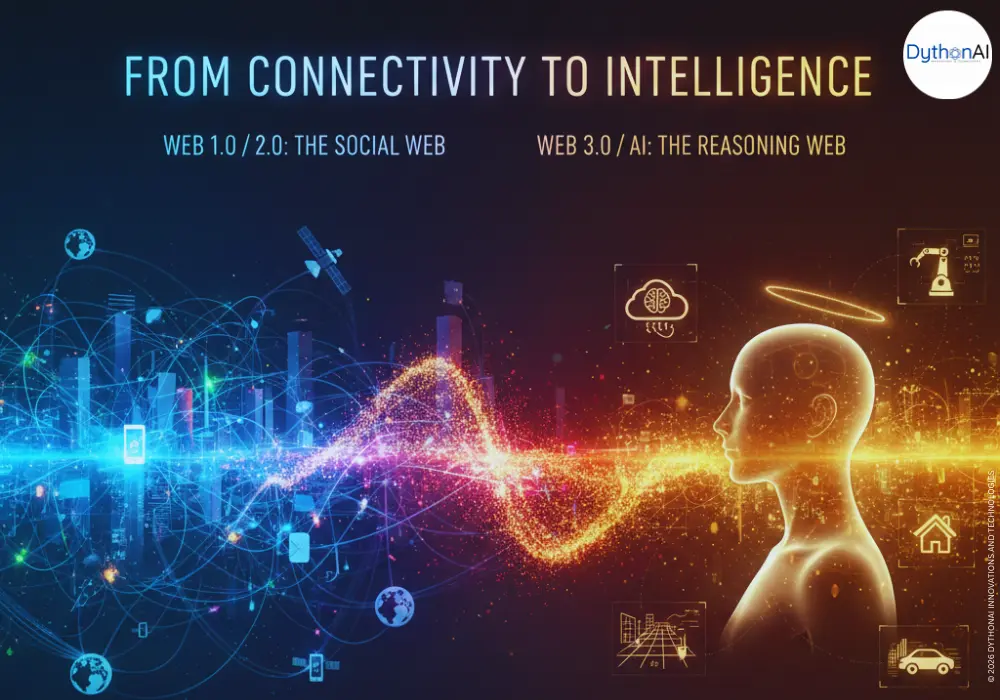
The early internet (often called Web 1.0) was largely static. Websites were digital brochures, and users were passive consumers of information. With Web 2.0 came interactivity—social media, user-generated content, cloud platforms, and real-time communication.
Now, we are entering a new phase where the internet doesn’t just deliver information—it understands, predicts, and acts.
This shift is driven by the convergence of:
Artificial Intelligence (AI)
Big Data
Cloud & Edge Computing
Internet of Things (IoT)
Advanced Networking (5G and beyond)
Together, these technologies are transforming the internet into an intelligent, adaptive ecosystem.
Data: The Fuel of Internet Intelligence
Connectivity created data. Intelligence thrives on it.
Every click, search, purchase, location ping, and voice command generates data. With advanced analytics and machine learning models, this data is no longer just stored—it is interpreted in real time.
Modern internet systems can:
Learn user behavior patterns
Predict intent and preferences
Optimize performance automatically
Detect anomalies and security threats
The internet is evolving from a passive network into an active decision-making layer.
AI at the Core of the Intelligent Internet
Artificial Intelligence is the brain behind this evolution.
AI-powered systems now:
Personalize content feeds and recommendations
Power conversational interfaces and chatbots
Enable voice assistants and natural language search
Automate customer support and operations
Drive autonomous systems and smart infrastructure
Instead of users adapting to technology, technology is adapting to users.
This marks a fundamental shift—from tool-based interaction to human-like collaboration.
Edge Computing: Intelligence Closer to the User
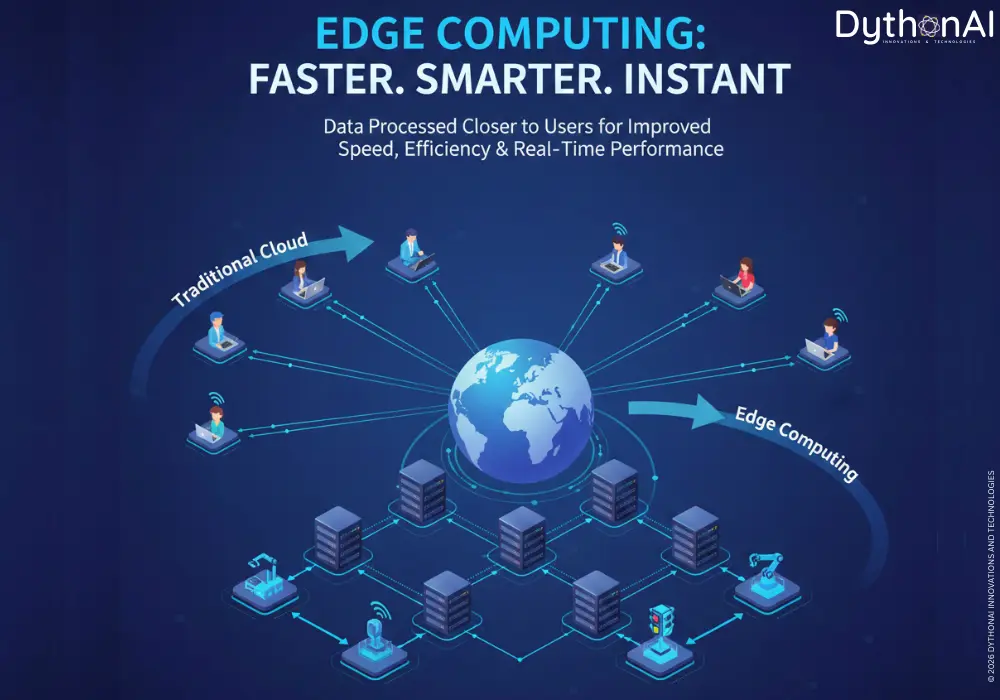
Traditional internet intelligence relied heavily on centralized cloud servers. Today, intelligence is moving closer to where data is generated.
With edge computing:
Processing happens near devices and users
Latency is reduced dramatically
Real-time decision-making becomes possible
This is critical for applications like:
Autonomous vehicles
Smart cities
Remote healthcare and diagnostics
Industrial automation
The internet is no longer just fast—it is responsive and situationally aware.
IoT and the Rise of a Sensing Internet
Billions of connected devices are turning the physical world into a digital interface.
Sensors embedded in homes, factories, wearables, and cities continuously feed data into intelligent networks. The result is an internet that can:
Sense environmental changes
Monitor systems autonomously
Trigger actions without human intervention
This evolution enables predictive maintenance, energy optimization, and smarter urban planning.
The internet is becoming a living system, constantly observing and responding to the world.
From Search to Anticipation
One of the most significant shifts is moving from search-based interaction to anticipatory intelligence.
Instead of asking the internet for answers, systems now proactively deliver insights:
Streaming platforms predict what you’ll watch next
Navigation apps anticipate traffic conditions
E-commerce platforms suggest products before you search
Security systems identify threats before breaches occur
The intelligent internet doesn’t wait—it anticipates.
Ethical Intelligence and Trust
As the internet becomes more intelligent, responsibility becomes critical.
Key challenges include:
Data privacy and ownership
Algorithmic bias
Transparency and explainability
Cybersecurity in AI-driven systems
The next phase of internet evolution must balance intelligence with ethics, trust, and human control. Intelligent systems should augment human decision-making, not replace accountability.
The Road Ahead: Internet as a Cognitive Platform
The future internet will function less like a network and more like a cognitive platform—capable of reasoning, learning, and collaborating at scale.
We can expect:
More autonomous digital services
Seamless human-AI interaction
Hyper-personalized experiences
Intelligent infrastructure powering economies
Connectivity laid the foundation. Intelligence is defining the future.
Conclusion
The internet is no longer just about being connected—it’s about being aware, adaptive, and intelligent. As it evolves, it will reshape how we live, work, and interact with the world.
Organizations and individuals that embrace this shift will not just use the internet—they will collaborate with it.
The age of the Intelligent Internet has begun.